Road construction in Sikkim requires careful planning, the right machinery, and equipment that can handle steep slopes, uneven terrain, narrow roads, and changing weather conditions. Unlike flat areas, hilly road projects often involve excavation, rock cutting, grading, soil compaction, material movement, and slope protection.
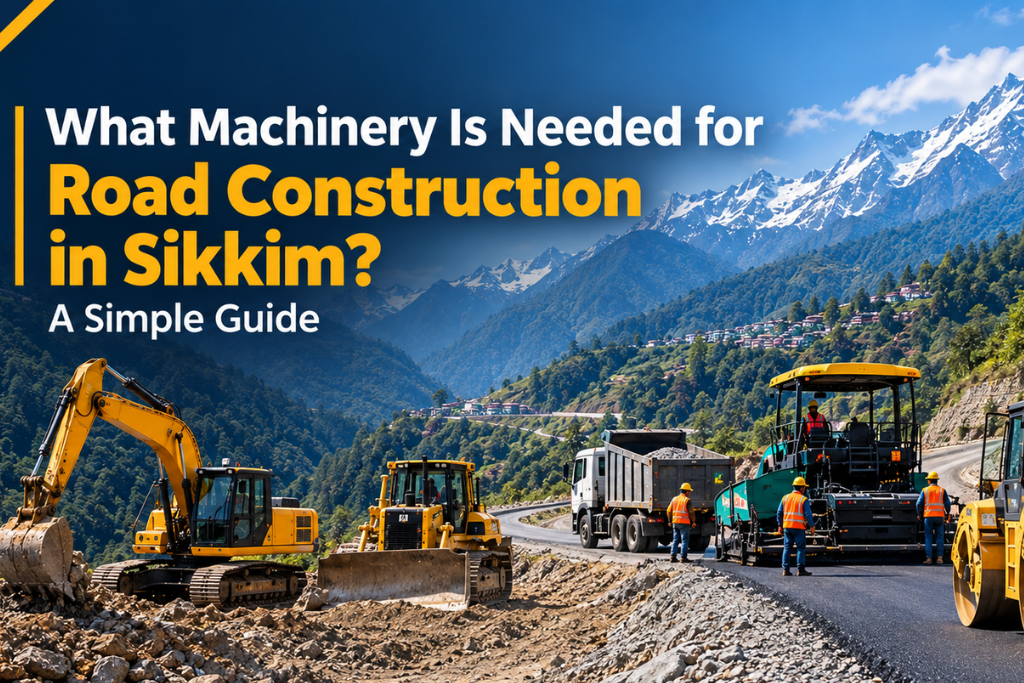
The right machinery depends on the type of road, soil and rock conditions, slope, available working space, project size, and the stage of construction. Excavators, bulldozers, wheel loaders, motor graders, compactors, rollers, cranes, and dump trucks can all have different roles in a road project.
Sikkim’s steep terrain, heavy rainfall, and landslide risks make proper machinery selection essential for road construction. This makes choosing the right machinery important for safe and efficient road construction and maintenance.
Understanding Road Construction Challenges in Sikkim
Road construction in Sikkim comes with unique challenges due to steep slopes, mountain cuts, narrow working areas, drainage channels, streams, and unstable ground. Heavy rainfall can further affect exposed soil, slopes, and newly prepared road surfaces.
These conditions make equipment selection an important part of project planning. The right machinery should match the terrain, site conditions, and type of work being carried out.
Before choosing equipment, contractors should consider:
- Slope and ground conditions
- Road width and available working space
- Excavation depth and volume
- Rock and soil type
- Material transportation distance
- Drainage and water-flow requirements
- Compaction requirements
- Weather and monsoon conditions
- Safety and site requirements
Essential Machinery for Road Construction in Sikkim
Different stages of road construction require different types of machinery. In Sikkim, where projects often involve steep slopes, narrow access routes, uneven ground, and challenging weather conditions, equipment needs to be selected according to the site and scope of work.
Here are some of the key machines commonly used for road projects:
1. Excavators
Their digging capability and range of attachments make them suitable for a variety of site conditions.
Common applications include:
- Road formation and hill cutting
- Slope preparation
- Clearing landslide material
- Preparing areas for retaining structures
The right excavator size depends on excavation depth, material, site access, and available working space. Compact models can be useful in restricted areas, while larger tracked excavators are suited to heavier earthwork.
2. Bulldozers
Bulldozers are built for pushing, spreading, and moving large quantities of soil and loose material. They can be particularly useful where substantial earthmoving is required.
Typical applications include:
- Site clearing
- Road formation
- Spreading fill material
- Rough levelling
- Clearing construction debris
For narrow mountain roads, the machine size should be carefully matched to the available working area and site access.
3. Soil Compactors and Road Rollers
Once soil, aggregate, or other road materials are placed, proper compaction is required to create a stable foundation. Rollers and compactors help achieve the required material density.
Common options include:
- Vibratory rollers
- Smooth drum rollers
- Soil compactors
- Pneumatic rollers
- Combination rollers
The suitable machine depends on the material, layer thickness, ground conditions, and required compaction level.
4. Wheel Loaders
Wheel loaders are useful for loading and moving loose materials around a construction site. They can support both roadwork and general material-handling operations.
They are commonly used for handling:
- Soil
- Sand
- Gravel
- Aggregates
- Crushed stone
- Construction debris
Wheel loaders can load dump trucks and move materials around larger working areas. However, on steep or restricted sites, equipment selection should account for access and ground conditions.
5. Cranes
Cranes become important when road projects include bridges, culverts, structural components, or heavy material handling.
Depending on the project, cranes may be used for:
- Bridge construction
- Lifting structural components
- Handling heavy materials
- Culvert-related work
- Installing large construction elements
The appropriate crane depends on lifting capacity, reach, ground conditions, access, and the weight of the load.
6. Rock Breakers and Drilling Equipment
Mountain road construction may involve hard rock that cannot be removed efficiently through conventional excavation alone. Hydraulic rock breakers attached to excavators can help break rock into manageable sections.
Drilling equipment may also be required for specific rock excavation activities, depending on the project design and approved construction methods.
Because rock excavation can influence surrounding slopes and structures, this work requires careful planning and suitable equipment.
Selecting the Right Equipment for Road Construction in Sikkim
Choosing the right equipment for road construction in Sikkim starts with understanding the site. Steep slopes, narrow access, unstable ground, rock conditions, and drainage needs can all affect machinery selection.
Project size and working conditions also matter. Before hiring or purchasing machinery, consider excavation volume, working space, material to be moved, haul distance, compaction needs, and site accessibility.
Infra Icon can help you identify suitable construction equipment based on your project requirements and site conditions, making machinery planning easier for roadwork in Sikkim.
How Infra Icon Can Support Road Construction Projects in Sikkim
Road construction in Sikkim requires the right machinery, careful planning, and practical knowledge of challenging terrain. Infra Icon helps project teams with suitable equipment and construction support based on site conditions, road requirements, and project scope.
As experienced civil construction contractors in Sikkim, we understand the demands of hill roads, excavation, grading, slope work, and other construction activities. From selecting the right machinery to managing on-site requirements, Infra Icon helps keep road projects organised, efficient, and ready for the conditions of the region.
Final Thoughts
Road construction is a step-by-step process where every stage contributes to the quality and usability of the finished road. From preparing the ground to shaping the route and completing the surface, each task needs to be handled with attention to the project’s actual conditions.
In Sikkim, a practical approach can make roadwork more manageable across different locations and terrain. Understanding the work ahead and choosing methods that fit the site can help create roads that are built for everyday use as well as the demands of the region.
Frequently Asked Questions
1. Why Is Drainage Important in Hill Road Construction?
Proper drainage helps move rainwater away from roads and slopes, reducing erosion, water damage, and wear on the road structure.
2. What Information Should I Provide Before Getting a Construction Estimate?
Share the project location, type and size of work, site conditions, access, machinery needs, and expected timeline to get a more accurate estimate.
3. What Should Be Included in a Road Construction Project Estimate?
A project estimate may include excavation, earthwork, materials, machinery, labour, transportation, drainage, slope-related work, site preparation, and other activities included in the project scope.
4. Can the Same Machinery Be Used for Different Construction Activities?
Yes. Many machines can perform multiple tasks when fitted with suitable attachments. For example, an excavator can handle digging, material removal, slope work, and rock breaking.
5. Can Construction Machinery Be Used for Projects Other Than Roads?
Yes. Equipment such as excavators, bulldozers, loaders, rollers, and cranes can also be used for building construction, excavation, slope work, site development, drainage, and infrastructure projects.