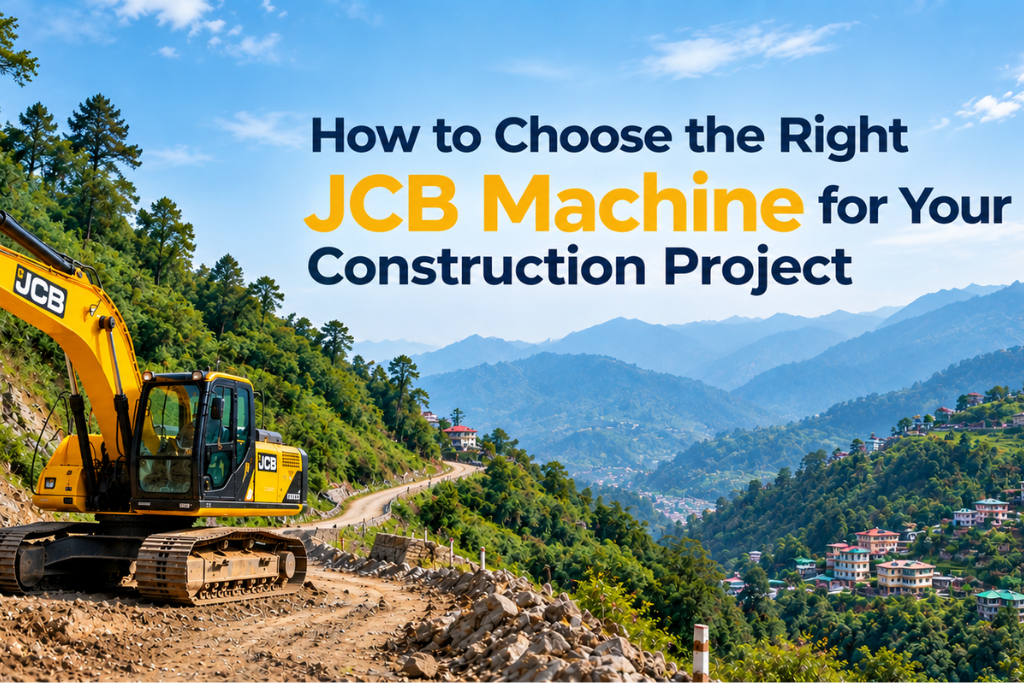
Choosing the right JCB machine can make construction work easier, faster, and more efficient. However, the best machine depends on the type of work, site conditions, available space, project duration, and the amount of material that needs to be moved or excavated.
For projects in Sikkim, these decisions can be even more important because many sites have slopes, uneven terrain, narrow access roads, and challenging ground conditions. Selecting equipment based on the actual requirements of the project can help avoid unnecessary costs and equipment limitations.
Whether you need machinery for excavation, earthwork, road construction, land development, or material handling, consider the following factors before choosing a JCB machine.
1. Start With the Type of Work
The first step is to identify exactly what you need the machine to do. Different construction tasks require different equipment capabilities. For example, a machine used for the following activities may have different performance requirements:
- Excavating soil
- Digging foundations
- Loading materials
- Preparing land
- Clearing a construction site
- Trenching
- Road development
- Moving loose materials
A backhoe loader may be suitable for general excavation and loading tasks, while a tracked excavator may be more suitable for deeper excavation and demanding earthwork. Understanding the main task first makes it easier to select the appropriate machine.
2. Consider the Size of Your Project
Project size should influence the size and capacity of the JCB machine you choose.
A smaller construction or land development project may not require a large machine. Using equipment that is much larger than necessary can increase operating and transportation costs while making it difficult to work in restricted areas.
Larger projects may require equipment with greater digging depth, lifting capacity, reach, or bucket capacity to complete the work efficiently. Before renting equipment, estimate the amount of work involved and the expected project timeline.
3. Check the Site Conditions
Site conditions can significantly affect machinery selection. Before choosing a machine, consider:
- Ground condition
- Slope and terrain
- Soil type
- Working space
- Access roads
- Maximum working height
- Excavation depth
- Obstacles around the site
This is particularly important for construction projects in hilly areas. A machine that works well on a wide, flat site may not be the most practical choice for a narrow or sloping location. For projects in Sikkim, assessing the site before arranging equipment can help ensure the selected machine is suitable for the working environment.
4. Consider Machine Size and Access
The machine must be able to reach the work area safely. Check the width of access roads, gates, bridges, turning areas, and other restricted points before arranging equipment. Also consider the machine's overall dimensions and operating radius.
For sites with limited access, a smaller or more compact machine may be easier to position and operate. This is especially important in hilly areas where roads can be narrow and construction sites may have limited working space.
5. Check Digging Depth and Reach
If your project involves excavation, digging depth and reach are important specifications to consider.
For foundation work, trenches, drainage, slope work, or other excavation tasks, the machine should be capable of reaching the required depth without operating beyond its recommended limits.
Also consider the machine's working reach. A machine with suitable reach can reduce the need to reposition equipment repeatedly, which may help improve productivity.
Always compare the equipment specifications with the actual requirements of your project.
6. Consider Bucket Capacity and Attachments
The bucket or attachment determines what type of work the machine can perform.
Depending on the project, you may need:
- General-purpose buckets
- Larger buckets for material handling
- Hydraulic breakers
- Augers
- Grapples
- Other specialized attachments
For example, excavation work may require a suitable digging bucket, while breaking hard material may require a hydraulic breaker. Before renting a JCB machine, confirm which attachments are available and whether they are suitable for the machine and planned work.
7. Think About Project Duration
How long you need the equipment can affect whether renting or purchasing makes more sense.
For a short-term project, renting can help avoid the long-term costs associated with owning and maintaining machinery. Longer projects may require a different rental arrangement depending on equipment usage and project requirements.
When planning JCB machine rental services in Sikkim, consider the expected working period, transportation requirements, and whether the machine will be needed continuously or only for specific stages of the project.
A clear rental period can also make it easier to plan equipment availability and project schedules.
8. Inspect the Machine Before Work Begins
Before accepting rented or hired equipment, inspect its general condition.
Check the following components:
- Tyres or tracks
- Hydraulic hoses
- Engine area
- Fluid leaks
- Bucket and attachments
- Brakes
- Steering
- Lights and alarms
- Safety equipment
- Visible damage
Any existing damage or mechanical concern should be reported before the machine starts work. A pre-use inspection can help avoid confusion about existing damage and identify issues that may affect equipment performance.
Choose Equipment Based on Productivity, Not Just Price
Choosing the cheapest machine is not always the most economical decision.
A machine that is too small may take longer to complete the work, while equipment that is too large may be difficult to transport or operate on the site. Instead, compare the machine's capacity with the actual job requirements.
Consider these four factors:
Work required + Site conditions + Machine capacity + Rental duration = Better equipment selection
This approach can help you choose equipment that fits the project rather than simply selecting the machine with the lowest rental cost.
When Should You Consider JCB Machine Rental Services in Sikkim?
Renting can be a practical option when you need construction equipment for a specific project or limited period. It can provide access to suitable machinery without requiring a long-term investment in equipment ownership.
JCB machine rental can be a practical choice for a wide range of construction and land development projects. It can support excavation, foundation preparation, earthwork, road construction, land development, site clearing, drainage work, and material handling, helping contractors complete essential site activities efficiently and with better control over project timelines.
For projects in Sikkim, discuss the site conditions, type of work, required machine capacity, rental period, and access limitations before selecting equipment.
Final Thoughts
Choosing the right JCB machine starts with understanding the job and the site. Project size, terrain, access, digging requirements, attachments, rental duration, operating costs, and operator availability should all be considered before making a decision.
For construction projects in Sikkim, equipment selection becomes especially important because terrain and site access can vary considerably. Infra Icon provides construction equipment rental support in Sikkim, helping contractors choose suitable machinery based on their project requirements, site conditions, and scope of work.
Selecting the right machine for the actual work can improve productivity, manage rental costs, and help keep construction activities running efficiently.
Frequently Asked Questions
Which JCB machine is best for excavation?
The right machine depends on excavation depth, soil conditions, site access, and the amount of material that needs to be removed.
Is a larger JCB machine always better?
No. A larger machine may offer greater capacity but can be difficult to operate in restricted spaces and may cost more to transport and rent.
Can JCB machines be used on hilly construction sites?
Yes, depending on the machine, terrain, ground conditions, and manufacturer's operating limits. Site conditions should be assessed before use.
Is renting a JCB better than buying one?
For short-term or occasional projects, renting can be more practical because it avoids the long-term costs of ownership and maintenance.
What affects JCB machine rental costs in Sikkim?
Rental duration, machine type, capacity, transportation, attachments, operator requirements, and project location can affect the overall cost.
Can Infra Icon help with JCB machine rental in Sikkim?
Yes. Infra Icon provides equipment-related solutions and rental support for construction and land development requirements in Sikkim.