Sikkim’s mountainous terrain can make construction and land development more challenging than projects on flatter sites. Steep slopes, narrow access routes, heavy rainfall, drainage issues and changing ground conditions can all affect how a project is planned and carried out.
In such conditions, heavy equipment plays an important role in handling tasks such as excavation, earthmoving, grading, soil compaction and material handling. Contractors can also consider construction equipment rental services in Sikkim when they need suitable machinery for specific projects without investing in equipment ownership.
However, selecting heavy equipment is not simply about choosing the largest or most powerful machine. Equipment should be matched to the terrain, site access, available working space, soil conditions, project requirements and safety needs. Understanding these factors can help contractors plan slope and land development work more effectively and make better use of available machinery.
Where Heavy Equipment Is Used in Land Development
Heavy equipment can support different stages of a land development project, from initial site preparation to excavation, grading and soil compaction. The type of machinery required depends on the terrain, site conditions, project design and available working space.
1. Site Clearing and Preparation
Before excavation or construction begins, a site may need to be cleared of vegetation, loose material, debris or unwanted surface material.
Suitable machinery can make this initial preparation more efficient, especially when working on larger sites or areas with difficult ground conditions. However, clearing work should follow the approved project plan and applicable environmental requirements. In sensitive mountainous areas, unnecessary disturbance can increase erosion, drainage or slope-related risks.
2. Excavation and Earthwork
Excavation is one of the most common applications of heavy equipment in land development. Excavators can be used for a range of tasks, including:
- Foundation excavation
- Trenching for utilities and drainage
- Removal of soil and loose material
- Drainage-related earthwork
- Controlled cutting into suitable ground
- General excavation and earthmoving
The required excavator size depends on factors such as excavation depth, material type, site access, working space and lifting requirements. Smaller machines may be more practical in restricted areas, while larger equipment can be considered where sufficient space and access are available.
3. Slope Preparation
Slope preparation requires particular care because changes to the shape or loading of a slope can influence drainage and ground stability.
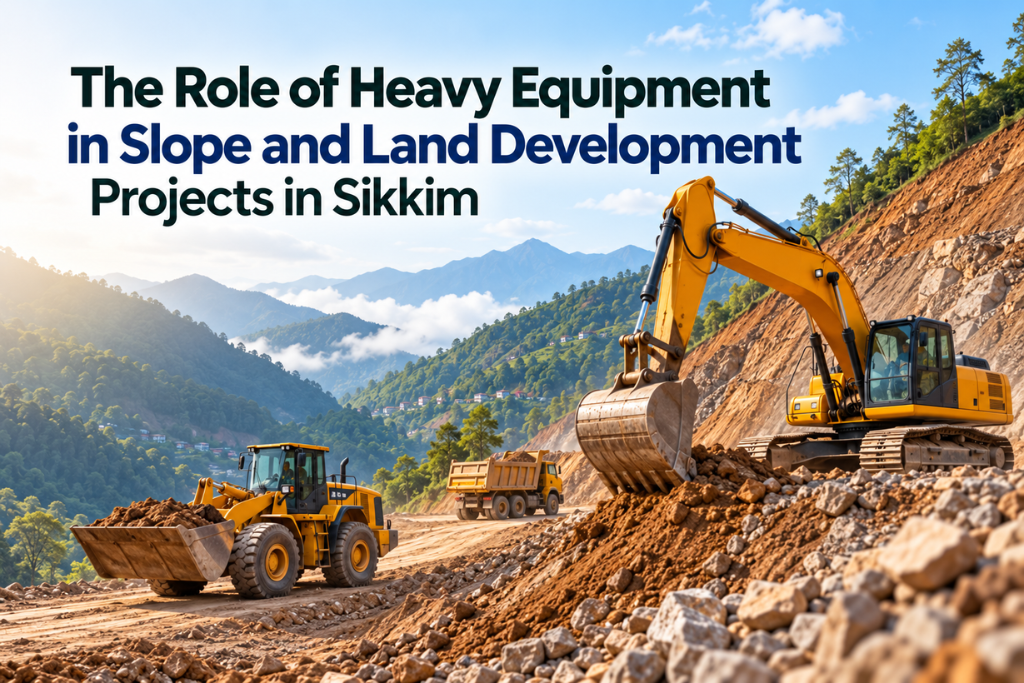
Where permitted by the engineering plan, excavators and other suitable equipment can assist with controlled excavation, slope shaping and the removal of unsuitable material. However, heavy equipment should not be considered a replacement for proper geotechnical assessment.
For projects in vulnerable areas of Sikkim, site-specific assessment, drainage planning and appropriate slope-stabilisation measures are important parts of responsible development.
4. Land Grading and Levelling
Uneven land may need to be graded before a building, road, yard, access area or other structure can be developed.
Earthmoving equipment can help move material from higher sections to lower areas according to the approved site plan. Proper grading can create a more suitable working surface while also supporting planned drainage and reducing unwanted water accumulation.
5. Soil Compaction
After filling, grading or other earthwork, soil may need to be compacted to achieve the ground condition required for the next stage of construction.
Soil compactors and road rollers can be used for suitable materials and applications. The appropriate compaction method depends on factors such as soil type, moisture content, layer thickness and project specifications.
Simply running a roller over the surface does not necessarily mean that the required level of compaction has been achieved. Compaction should be carried out according to the project specifications, with appropriate testing used where required to verify the results.
Common Heavy Equipment Used for These Projects
Different stages of land development require different machines. Equipment selection should consider the terrain, site access, working space and project requirements.
Excavators
Used for digging, trenching, earth removal and general site preparation. Different attachments can support specialised tasks.
Bulldozers
Useful for pushing and spreading soil, clearing suitable areas and rough grading where sufficient operating space is available.
Soil Compactors
Used to compact suitable soil and fill materials after filling or grading, helping prepare the ground for further construction.
Road Rollers
Commonly used to compact prepared surfaces for roads and other site-development work. The right roller depends on the material and required finish.
Cranes
Used for lifting and positioning heavy materials or structural components. Their operation requires careful planning around ground conditions, access, load capacity and safety.
Why Equipment Selection Matters on Mountain Sites
Choosing the right heavy equipment is important for mountainous sites in Sikkim, where steep slopes, narrow access routes, uneven ground and limited working space can make operations more difficult.
The right equipment can help contractors:
- Work efficiently in restricted areas.
- Handle excavation and earthmoving more effectively.
- Improve control during grading and compaction.
- Adapt to difficult terrain and changing ground conditions.
- Avoid using machinery that is too large or unsuitable.
Equipment should be selected based on the machine’s size, capacity, reach, attachments, site access and ground conditions. The goal is not to choose the biggest machine, but the one that best suits the specific task and site requirements.
Safe Land Development Requires More Than Heavy Equipment
Heavy equipment can improve the efficiency of excavation, earthmoving and site preparation, but it is only one part of safe land development. In Sikkim’s mountainous terrain, proper site assessment, engineering planning, drainage and slope-stabilisation measures may also be required.
Infra Icon supports construction and site development projects in Sikkim with suitable construction equipment and project-focused solutions. Equipment should be selected according to the terrain, access conditions, type of work and specific project requirements.
Combining suitable machinery with proper planning and safe site practices can help keep land development work more controlled and efficient.
Final Thoughts
Developing land in Sikkim requires more than moving soil from one place to another. Every site has its own terrain, access limitations and ground conditions, so the machinery and working approach need to be planned accordingly.
Excavators, bulldozers, compactors and other equipment can make demanding site work more manageable when used for the right purpose. However, their effectiveness depends on proper planning, suitable equipment selection and safe operating practices.
For contractors who need machinery for a specific stage of a project, construction equipment rental services in Sikkim can offer a practical way to access suitable equipment without committing to long-term ownership. The key is to match the machine to the work and the conditions of the site.
Frequently Asked Questions
1. Does Infra Icon provide construction equipment rental services in Sikkim?
InfraIcon provides construction equipment rental services in Sikkim for projects requiring suitable heavy machinery for earthwork, site preparation, land development and other construction activities.
2. Can I rent equipment for a specific stage of my project?
Yes. Construction equipment can be rented according to the duration and stage of the project, such as excavation, grading, compaction or material handling.
3. What should I check before renting construction equipment in Sikkim?
Check the machine's specifications, condition, attachments, transport requirements, rental terms, maintenance support and suitability for the actual site conditions.
4. What information should I provide when enquiring about equipment from Infra Icon?
Provide the project location, type of work, required equipment if known, expected rental period and any important site-access or terrain details.
5. Can I hire machinery for multiple stages of one construction project?
Yes. Different machines may be required at different stages, such as excavation, earthmoving, grading and compaction. Requirements can be discussed according to the project schedule.