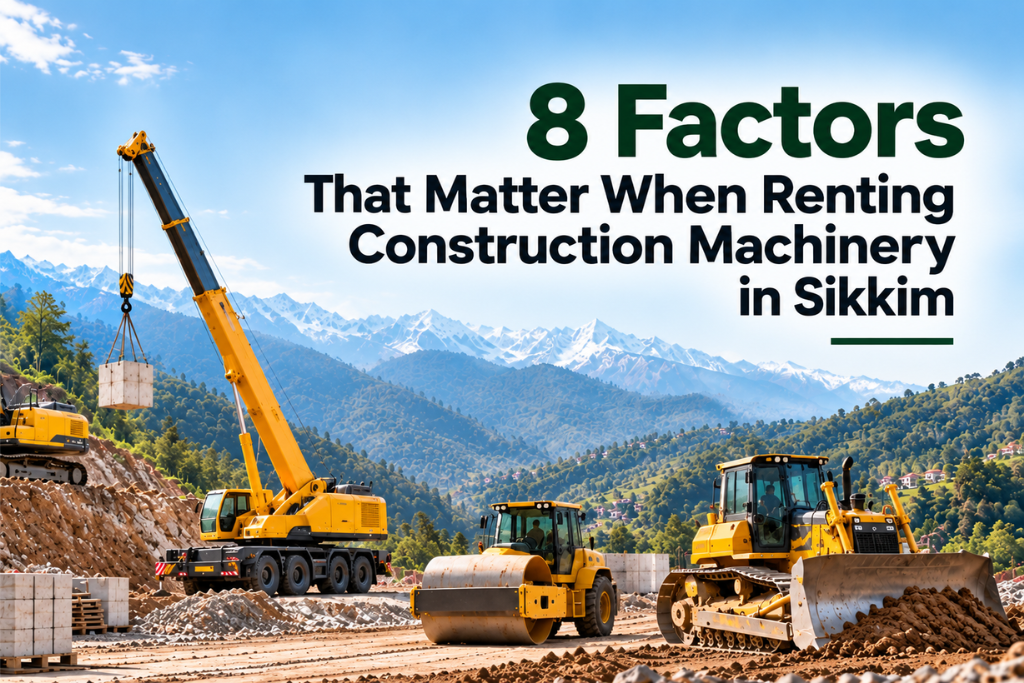
Not every construction equipment is suitable for every site. Factors such as terrain, working space, project duration, and the type of work can influence which equipment is needed. For projects in Sikkim, choosing the right construction machinery rental services in Sikkim can help ensure that suitable machinery is available when and where it is required.
A rental decision should also consider the machine's condition, performance, availability, rental costs, and technical support. Checking these details in advance can help avoid unexpected delays and equipment-related problems. Let’s look at eight important factors to consider when renting construction machinery in Sikkim.
1. Match the Machinery to the Work
The first step when renting construction machinery is to understand the exact requirements of the job. Different activities such as excavation, earthmoving, grading, lifting, and compaction require different types of equipment.
Before renting, consider:
- What work will the machine perform?
- What material will it handle?
- How much work needs to be completed?
- What capacity or working range is required?
- Will the machine be used for one task or several tasks?
Choosing machinery based on the actual work and site conditions can help improve efficiency, reduce unnecessary rental costs, and keep the project moving smoothly.
2. Consider the Site Conditions
Site conditions can have a major impact on machinery selection, especially for construction projects in hilly areas. Before booking equipment, carefully assess the location where the machinery will be used.
Consider factors such as:
- Available working space
- Site access
- Slopes and gradients
- Road width
- Working height
- Ground stability
Providing accurate site information to the rental provider can help ensure that the selected machinery is suitable for the location and the specific working conditions.
3. Evaluate Equipment Size for the Project
The size and capacity of the machine should match the scale and requirements of the project. A larger machine is not always the better choice, as it may need more space for operation, access, and transportation. On the other hand, a smaller machine may not have enough capacity to handle the required workload efficiently.
Check specifications such as:
- Operating weight
- Working depth
- Lifting capacity
- Reach
- Ground clearance
- Overall dimensions
Choose a machine that provides sufficient capacity for the required work while remaining practical for the available site space and transportation conditions.
4. Inspect the Machinery Before Rental
Well-maintained equipment is less likely to cause unexpected interruptions during important stages of the project.
A basic inspection should cover visible and essential components such as:
- Engine and fluid levels
- Hydraulic systems
- Tyres or tracks
- Attachments
- Warning indicators
- Safety equipment
It is also important to clarify how routine maintenance, repairs, and unexpected breakdowns will be handled throughout the rental period.
5. Plan Equipment Rental Duration
The rental period can vary depending on the type, scale, and schedule of the work. Some construction activities may require equipment for only a few days, while larger or long-term projects may need machinery for several weeks or months.
Before confirming the rental, clarify:
- Minimum rental period
- Daily, weekly, or monthly rental rates
- Start and return dates
- Charges for additional rental days
- Conditions for early return
It also helps reduce the possibility of unexpected charges if the machinery is required for longer than initially planned.
How Long Should You Rent Construction Machinery?
The rental period should generally match the expected duration of the work, overall project schedule, and possible site delays. If the project timeline is uncertain, discuss extension terms and additional rental charges with the provider before booking the machinery.
6. Ask About Transportation to the Site
Transporting heavy construction machinery to a project site requires careful planning, especially when the site is located in a remote area or has difficult road access. Narrow roads, steep gradients, sharp turns, and limited access can make the movement of large equipment more challenging.
Before renting, ask:
- Is transportation included in the rental arrangement?
- Is the access road suitable for heavy equipment?
- Are there steep sections, sharp turns, or other access challenges?
- Who is responsible for loading and unloading?
- Are transportation and delivery charges separate?
- How much advance notice is required for delivery?
Providing accurate information about the site location, road conditions, access route, and any difficult sections can help the rental provider plan delivery more effectively and reduce the risk of transportation delays.
7. Clarify Operator and Support Requirements
Before confirming the rental, clarify whether an operator is included in the rental arrangement or needs to be arranged separately.
It is equally important to understand what support will be available if the machinery develops a problem during the rental period. Ask about:
- Operator availability
- Operator responsibilities
- Breakdown assistance
- Contact process for urgent issues
Having clear arrangements for operators, maintenance, and technical support can help reduce downtime and keep the project moving if an equipment-related issue occurs.
8. Understand the Complete Rental Cost
The rental price is an important consideration, but the advertised rate may not represent the total cost of using the machinery. Additional expenses can vary depending on the equipment, rental duration, transportation, and services included in the agreement.
The total rental cost may include:
- Rental duration
- Attachments or additional equipment
- Fuel arrangements
- Maintenance responsibilities
- Additional working hours
- Applicable taxes or other charges
Before confirming the rental, ask for a clear breakdown of all expected costs and confirm which services are included in the quoted price. This makes it easier to compare rental options, avoid unexpected expenses, and plan the project budget more accurately.
Get the Right Machinery for Your Construction Needs
Selecting the right construction machinery involves considering the type of work, site conditions, equipment capacity, rental duration, transportation, operator support, and overall cost. Taking the time to check these factors can help you choose equipment that fits your project requirements and avoid unnecessary delays or expenses.
If you are looking for construction machinery rental services in Sikkim, Infra Icon provides a range of construction equipment for different project requirements. Contact the team to discuss your site needs, check equipment availability, and understand the rental terms before booking.