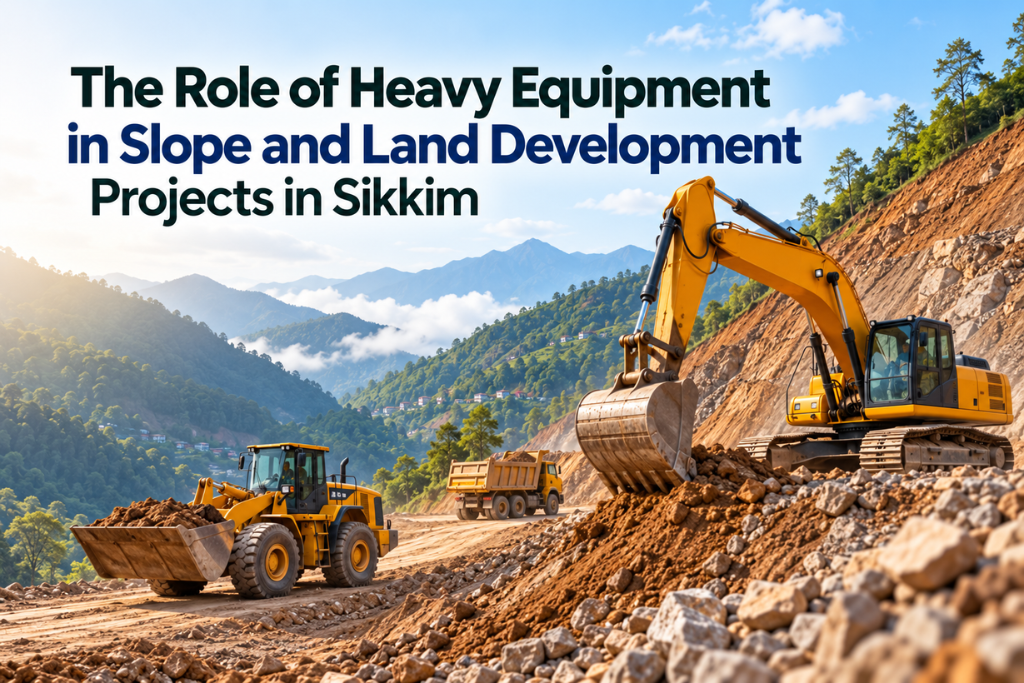
Building a house or developing a property in Sikkim requires careful planning, proper site assessment and good construction practices. The state's hilly terrain, slopes, rainfall, changing weather conditions and difficult site access can make construction different from projects in plain areas.
Whether you are planning a residential building, commercial property, land development project or other civil construction work, proper preparation before construction begins can help improve project coordination, quality and safety.
Here are 10 essential construction tips for building in Sikkim.
1. Understand the Site Before Starting Construction
A proper site assessment is one of the first steps in any construction project. Before excavation or foundation work begins, understand the site's access, slope, ground levels and surrounding conditions.
- Check site access and approach roads
- Understand ground level differences
- Identify existing slopes
- Consider soil and ground conditions
- Check natural drainage patterns
- Consider nearby buildings and structures
- Plan access for construction machinery
Proper site planning can help the construction team select suitable methods for excavation, foundation work, material movement and other site activities.
2. Plan Drainage Properly
Water management is especially important when constructing in hilly areas. Poor drainage can create problems around buildings, roads, retaining structures and developed land.
Before starting construction, consider surface drainage, roof-water discharge, site drainage and water flowing from higher ground.
- Surface drainage
- Roof-water discharge
- Site drainage
- Roadside drainage
- Retaining-wall drainage
- Water flow from higher ground
A properly planned drainage system can help manage rainwater and protect the construction site.
3. Give Special Attention to the Foundation
The foundation transfers the building load to the ground and is one of the most important components of a building.
Foundation requirements can vary depending on the building design, soil conditions, ground slope, structural loads and site levels.
Foundation work should always follow the approved structural design and recommendations of the qualified engineer responsible for the project.
4. Plan Excavation and Hill Cutting Carefully
Excavation and hill cutting can significantly change the existing profile of a construction site. In hilly areas, uncontrolled excavation may create challenges related to slopes, drainage, access and surrounding properties.
Before excavation begins, consider:
- Required excavation depth
- Cut-and-fill requirements
- Machinery access
- Soil and rock conditions
- Drainage requirements
- Slope protection
- Disposal or reuse of excavated material
Careful planning can make excavation and land development work more organised and efficient.
5. Use Quality Construction Materials
Construction materials play an important role in the quality and durability of a project. Materials should be selected according to the project specifications and purchased from reliable sources.
Common construction materials include:
- Cement
- Sand
- Stone aggregate
- TMT reinforcement steel
- Bricks or blocks
- Concrete materials
- Waterproofing materials
For structural construction, material selection and usage should follow the approved structural design and applicable construction standards.
6. Check RCC Work Before Concrete Placement
RCC construction requires proper coordination between reinforcement, formwork and concrete placement. Important checks should be completed before concrete is poured.
- Reinforcement placement
- Bar diameter and spacing
- Concrete cover
- Formwork alignment
- Structural dimensions
- Embedded items
- Concrete requirements
- Access for concrete placement
A pre-concreting inspection can help identify issues before concrete placement and support better construction quality.
7. Select Construction Machinery According to the Site
Construction machinery can improve productivity when the right equipment is selected for the specific work and site conditions.
Depending on the project, construction equipment may include excavators, JCB backhoe loaders, rock breakers, tippers and other specialised machinery.
For construction projects in Sikkim, machinery selection should consider site access, working space, ground conditions, transportation requirements and the actual work involved.
The objective should be to choose the right equipment for the job, rather than simply choosing the largest machine available.
8. Protect Slopes and Retaining Structures
Construction on sloping land requires careful planning of earthwork, drainage and retaining structures.
Depending on the site and engineering requirements, a project may require retaining walls, suitable drainage arrangements, slope protection and controlled earthwork.
These works should be designed and executed according to actual site conditions and professional engineering requirements.
9. Maintain a Proper Construction Schedule
Construction involves several activities that depend on one another. A clear project schedule can help coordinate labour, materials, machinery and site activities.
A typical construction sequence may include:
Site Preparation → Excavation → Foundation → RCC Structure → Masonry → Services → Finishing
When planning construction in Sikkim, weather conditions, site accessibility and material transportation should also be considered.
10. Prioritise Safety at Every Stage
Construction safety should be considered from the beginning of the project. A well-organised site can help reduce unnecessary risks to workers, contractors, visitors and nearby properties.
- Use appropriate personal protective equipment
- Follow safe excavation practices
- Maintain machinery safety
- Use safe scaffolding and formwork
- Control site access
- Store materials safely
- Maintain electrical safety
- Follow safe lifting practices
- Conduct regular site inspections
Bonus Tip: Clearly Define the Construction Scope
Before construction starts, clearly define the scope of work between the client and contractor.
The work order or agreement should clearly mention:
- Scope of work
- Materials supplied by the client
- Materials supplied by the contractor
- Labour responsibilities
- Machinery requirements
- Project duration
- Payment schedule
- Measurement method
- Quality requirements
- Safety responsibilities
- Procedure for additional work
A clearly defined scope can help reduce misunderstandings and improve coordination during construction.
Why Construction Planning Matters in Sikkim
Construction in Sikkim can involve challenging terrain, steep slopes, rainfall, limited site access and changing ground conditions. Because of this, construction planning should be based on the actual site rather than relying on a standard approach for every project.
From site preparation and excavation to foundation work, RCC construction, retaining structures and finishing, each stage requires proper coordination.
Infra Icon – Construction & Infrastructure Services in Sikkim
Infra Icon provides construction and infrastructure-related services in Sikkim, supporting residential construction, RCC structural work, excavation, land development, retaining wall construction, road construction and other civil construction requirements.
With a Sikkim-focused approach, Infra Icon supports construction projects according to their individual site conditions, project requirements and scope of work.
Whether you are planning a construction project in Gangtok, Ranipool, Marchak, Pakyong, Rangpo, Singtam or other areas of Sikkim, proper planning should be the first step.
Final Takeaway
Good construction begins long before the first brick is placed. Proper site understanding, engineering, material selection, drainage planning, safety and project coordination are important parts of a successful construction project.
For construction in Sikkim, paying attention to terrain, drainage, foundations, slopes, access, materials and weather conditions can help create a more organised construction process.
Plan Carefully. Build Responsibly. Build for the Future.
Infra Icon
Construction & Infrastructure Services in Sikkim